Dedicated to Promoting and Maintaining Access to Climbing and Outdoor Recreation
Join Us

Help Support ACSD: Find out how you can help support our efforts to promote and maintain access to climbing and outdoor recreation. <More Info>

5.10 Shoe Demo, ACSD Membership Drive, & Bouldering Comp: There is a lot going on this evening. Check it out! <More Info>

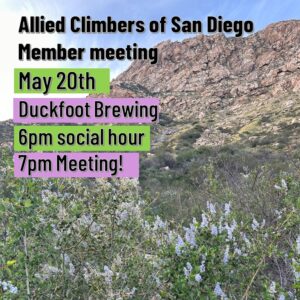
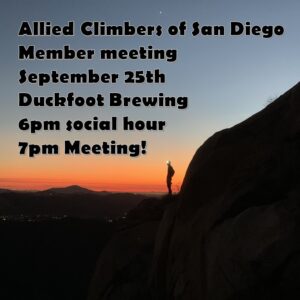
Next ACSD Membership Meeting: Tuesday, May 27th, 2008: 7:00 - 8:00pm (Dinner 6:00-7:00) <More Info>

Trail Maintenance Volunteer Opportunity: Join us for a trail maintenance project at Nobel Canyon Trail on Saturday, June 7th from 9AM-1PM <More Info>

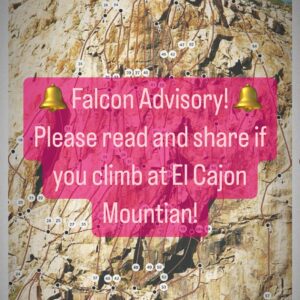
Raptor Activity: Check here to find out where there is known raptor activity. <More Info>

Important Access Issue: Cleveland National Forest Proposed Closures
(Updated 03/26/2008)

Corte Madera
Corte Madera

Eagle Peak

The Cleveland National Forest (CNF) of the US Forest Service (USFS) is proposing seasonal nesting closures for in-active and historical golden eagle and prairie falcon nesting habitat. The CNF proposal will prohibit access to well-established hiking and rock-climbing resources from December 1st through May 30th annually for non-sensitive and non-endangered species. (1)   Due to soaring temperatures and routine fire danger closures by the CNF during the remaining months of the year the parameters of the proposal effectively remove all access to these valuable and limited rec-areas even though numerous nesting opportunities for eagles and falcons occur elsewhere within the CNF and even though no current conflict between rec-use and successful nesting exists.

The CNF proposal correctly identifies the Bald and Golden Eagle Protection Act (BGEPA) as the governing statute to be used when managing for golden eagles, but then significantly over-reaches requirements of the act by establishing up to 2,640 foot buffer zones for historic nesting areas. USFWS BGEPA Guidelines provide for 330 foot buffer zones for active nests only, stipulating that after 5 years of disuse the probability of an alternate nest becoming active is considered remote enough that buffer zone closure protections are no longer required.

CNF records recently released through an ACSD Freedom of Information Act request clearly document no recorded golden eagle nesting at Corte Madera since 1978, “speculative” nesting at Eagle Peak prior to 1991, providing no evidence nesting occurred on the cliff faces that climbers use for climbing. Regardless of these documents, the CNF has proposed cliff closures on the bases of in-active and historical “area” nesting, stating:  For the purposes of the current analysis, active nests are considered to be those used in the last 10 years; inactive are those used in the last 11 to 49 years, and historical nests are those used 50 or more years ago.”

Equally alarming is the CNF’s unprecedented interpretation of the Migratory Bird Treaty Act (MBTA) as a land management zoning authority to restrict recreational access to public lands. The MBTA is an act of commerce, ratified in 1918 to control the indiscriminate slaughter of migratory birds. By invoking the MBTA as their given authority to restrict recreational access by creating seasonal closures for golden eagles and prairie falcons the CNF is going well beyond previous interpretations, establishing a precedent which could lead to closures across the country to protect even the most common of bird species that are not threatened or endangered in any way.

As an Affiliated Local Climbing Organization of the Access Fund, ACSD fully endorses their opposition to the CNF Proposed Closures. ACSD supports the Access Fund's Conviction (PDF) that, "Closures of public land by federal land management agencies is an extreme measure, and should only be initiated through clear legal authority and documented scientific need. The Access Fund cautions the CNF against mandatory closures that restrict recreational climbing to ensure the nesting of non-threatened or endangered species with neither a tenable legal basis nor supporting scientific data." This premise is the foundation upon which ACSD formed, and as a 501(c)(3) California Non-Profit Public Benefit Corporation we are committed to evaluating both the legal and environmental aspects of every access related issue we address in upholding our Mission Statement:

The Allied Climbers of San Diego is a local, environmentally responsible, non-profit organization dedicated to promoting and maintaining access to climbing and outdoor recreation.

ACSD feels the protection of raptors is very important. As outdoor enthusiasts and nature lovers we care deeply about these creatures and want for them to thrive. Although the CNF proposal may seem like a good idea on the surface, when agencies tasked with oversight of public lands put forth measures that are not based on sound science and clear legal authority, or the effective resource management practices currently used by other public land agencies, their actions only serve to significantly erode public support for genuine conservation efforts.

ACSD endorses the alternative of sound management practices which establish buffer zones for active nests, not speculative nesting locations. This approach is used at Joshua Tree National Park specifically to manage both golden eagles and prairie falcons relative to hiking and climbing activities. The park does not close areas for monitoring; establishing closure advisories only after a nest has been verified active by park biologists. And though Joshua Tree is one of America’s most popular climbing destinations, hosting a much higher percentage of climbers and climbing routes to nesting resources than the CNF, this has been an extremely effective practice benefiting both park visitors and resources alike. It is the approach ACSD hopes the CNF will see fit to utilize.

Raptor protection is a valid issue. Protecting active raptor nesting areas makes sense. Protecting responsible public access to public lands also makes sense. The climbing community is largely comprised of people sensitive to enjoying and protecting the natural environment they love. What we are asking is that our more important climbing areas showing no evidence of active raptor nesting remain free of closure. ACSD feels it makes little sense to close off important climbing and hiking areas with the hope that raptors may arrive when numerous alternative nesting resources exist elsewhere within the CNF for golden eagles and prairie falcons.

We can not ensure future generations will responsibly enjoy recreation on our public lands if we continue to close them off to people. We surely cannot continue to foster citizens who love and wish to protect nature unless we continue to protect responsible public access rights to these lands. ACSD feels it is important to protect actual active raptor nesting while at the same time maintaining valuable climbing and hiking areas currently not used by raptors as open to the responsible climbing and hiking community for their continued use and enjoyment.

ACSD has entered into a Memorandum of Understanding (MOU) (PDF) with the CNF in order to work with them in developing a solution that effectively resolves this current recreational access threat. One that, like Joshua Tree National Park, balances raptor nesting resources with available hiking and climbing resources. We will continue to keep the climbing community informed as developments occur and we encourage everyone to read more about this issue by visiting the Timeline link below and exploring our web site. We also encourage becoming a member of ACSD and the Access Fund to support local and national climbing organizations in our continued fight to maintain responsible access to local and national climbing areas.  Thank you.

>Timeline - CNF's proposals and the Access Fund's & ACSD's responses to them

  1. Numerous bird species were identified for evaluation as “species of concern” during development of the USFS Forest Land Management Plan(s). USFS Final Environmental Impact Statement (FEIS), finalized in September 2005, specifically identified four bird species as "Sensitive Species" within the CNF. Per FEIS Table 363 [see link below] these are: 1) The San Diego Cactus Wren 2) The Willow Flycatcher 3) The American Peregrine Falcon 4) The California Spotted Owl.
         
    USFS FEIS (see PDF p-168): http://www.fs.fed.us/r5/scfpr/projects/lmp/docs/feis-v1.pdf